abstract: |

National Reform Association ==>Christian Statesman ==>March - April 2001 ==>Why Should I Study Theology?

POBox 8741-WP
Pittsburgh, Pennsylvania 15221
The Christian Statesman

Why Should I Study Theology?

by Robert Fugate

It is not uncommon today for people to question the importance of studying theology. Some Christians affirm that they just want to hear "practical" sermons, not sermons that teach theology. (Don't they realize that biblical ethics are derived from biblical theology?) Others assert that "theology divides," so they conclude that all theology is detrimental. Because of such attitudes, reputed authorities on church growth warn pastors to avoid teaching doctrine. Yet, we must ask, is this a biblical approach? Are there reasons why we should study theology? I would like to suggest several reasons why it is imperative for Christians to study orthodox, Christian theology.

The Subject of Theology Is the Most Important Subject in the Universe

Theology is the study of the personal, triune God--His nature and His purposes, which He reveals through His words and His deeds. One attribute of this sovereign, unchanging God is truth. Because God is truth, His Word is truth (Jn. 17:17). Since God's Word is truth, it functions as the ultimate standard of truth, the reference point by which every other claim to truthfulness is to be measured. God tells us that His written Word is profitable for doctrine (2 Tim. 3:16). All of these facts inform us that the study of orthodox theology or biblical doctrine is the most important field that we could ever study!

The study of biblical doctrine is usually referred to as systematic theology. In using the term "systematic theology," we indicate that there is a comprehensive, unified statement of what Scripture as a whole teaches about God.

Theology Is the Foundation for Every Aspect of Life and Study

Systematic theology is necessary if men are to think intelligently and logically about anything. Without the concept of systematic theology and the God it sets forth, we cannot hold to a rational and understandable universe, nor to any meaningful order therein. There is no other God, no other truth, nor other possibility, system, or meaning outside of Him. God as Creator, Providential Ruler, and Redeemer is the necessary cause, connection, will, power, and action between and in all things. Anything short of that is not theology but anthropology.

Thus, orthodox Christian theology provides the foundation for every other field of study. Apart from biblical doctrine one can never properly understand the role of church, state, school, family, the arts and sciences, the vocations, or anything else.

Theology Unites Christians in the Truth

True fellowship with God (who is truth) and with God's people requires truth. The "unity of the Spirit" can only be enjoyed where there is the "unity of the faith" (Eph. 4:3-6, 13-15), for light can have no fellowship with darkness (2 Cor. 6:14-16). Anyone preaching unity, while setting aside apostolic doctrine (as infallibly recorded in Scripture) is to be opposed (Acts 15:1f, 23f; 1 Cor. 14:36-38; 2 Cor. 13:2f; Gal. 1:8f; 1 Thess. 4:8; 2 Thess. 3:6, 14; Tit. 2:15; 1 Jn. 2:18; 2 Jn. 9-11; Rev. 22:18f).

Systematic theology works to strengthen a believer's epistemological self-consciousness1 by rooting out the inconsistencies of smorgasbord religion. There is no place for epistemological, theological, or ethical pluralism in Christian thinking. God is the source of truth.

Theology Protects Christians from Pernicious Errors

God's Word separates truth from error, teaching "sound doctrine" (1 Tim. 1:10; 4:6; 6:3; 2 Tim. 1:13; 4:3; Tit. 1:9; 2:1, 10), while warning against false doctrine (2 Cor. 11:4; Gal. 1:6-9; 1 Tim. 1:3; 4:1; 6:3). Thus, there is a sense in which doctrine is supposed to divide. God Himself has decreed a perpetual antithesis between His kingdom and the kingdom of Satan, between truth and error (Gen. 3:15; Mt. 25:41). Christ caused divisions (Mt. 10:34; Lk. 12:51; Jn. 7:12, 43; 9:16; 10:19)--even through his teaching (Jn. 6:61-66; 10:19-21). Biblically sound systematic theology works to uproot all alien presuppositions, and to protect against pagan philosophies (Col. 2:8).

Some doctrinal errors are so serious that God calls them "destructive heresies" (2 Pet. 2:1) and "doctrines of demons" (1 Tim. 4:1). But apart from an understanding of doctrine, how can one know what constitutes heresy, and which heresies are particularly "destructive" ("damnable"--kjv)? Scriptures tells us that God speaks a curse on anyone preaching any other gospel (Gal. 1:8f). Examples could include: a gospel of salvation by grace plus works (e.g., Roman Catholicism, Mormonism, etc.); a psychological gospel; a gospel of socialism (e.g., Liberation Theology); a gospel of uninterrupted health and wealth; a gospel of a finite god (e.g., process theology, the "open view of God"); etc.

Some people object that doctrine is relatively unimportant; it is passion for Jesus that is primary. However, the choice between passion for Jesus and orthodox Christian doctrine is a false dilemma. The only option is both/and, not either/or. Without orthodox Christian doctrine, you cannot know whether the Jesus that other people are passionate about is the same Jesus that you are passionate about. Numerous cults and religions have their own "Jesus": the Jehovah's Witnesses' Jesus, the Mormon's Jesus, the Liberal's Jesus, the Unitarian's Jesus, the New Ager's Jesus, the Jews' Jesus, the Muslim's Jesus, the Unity's Jesus, the Christian counselors' Jesus, etc. The situation was no different in the early church with the Ebionite Jesus, the Docetic Jesus, the Arian Jesus, the Appollinarian Jesus, the Nestorian Jesus, the Eutychian Jesus, etc. And most of these groups were passionate about their "Jesus"!

Furthermore, without orthodox Christian doctrine, you cannot even know whether the Jesus that you are passionate for is the Lord Jesus Christ, the God-man who sits at the right hand of God the Father, i.e., the Jesus of the Bible! Thus, it is not a matter of choosing between passion for Jesus and orthodox Christian doctrine. The Apostle Paul is a good example of how the two must be blended.

The church throughout all ages has found the study of theology to be indispensable. It is usually heretics who most stringently oppose the study of historic, orthodox Christian theology. Of course, heretics themselves are not devoid of theology.

The Study of Theology Is Necessary to Obey Scripture

Christians need to learn biblical doctrine in order to fully obey the Lord. For example, Scripture commands us: to love the Lord our God with all of our mind (Mt. 22:37; Deut. 6:5); to stop thinking as the world thinks (Rom. 12:2); to take every thought captive to the obedience of Christ (2 Cor. 10:5), that Christ may have preeminence in everything (Col. 1:18). In other words, we must (on a creaturely level) think God's thoughts after Him. To think God's thoughts after Him, we must systematize God's written Word, applying it to all areas of life. In short, we must develop a comprehensive, Christian world-view through which we can interpret all of life--including business, economics, the role of civil government, marriage and family, education, science, art, music, recreation, etc.--from God's perspective.

To settle for anything less than a full-orbed, Christian world-view is a denial of Christ's sovereignty or lordship over all areas of life, and a denial that "all the treasures of wisdom and knowledge" can only be found in Him (Col. 2:3). Furthermore, any lesser goal robs God of the glory due His name. Clearly, to be able to apply the Bible to every area of life and culture will require studying biblical doctrine.

Obeying the straightforward biblical commands, such as, "Contend earnestly for the faith which was once for all delivered to the saints" (Jude 3), necessitates the study of theology. How else can one know what constitutes "the faith which was once for all delivered to the saints?" The same could be said of many other verses. Christians are to continue steadfastly in the apostles' doctrine (Acts 2:42; 2 Tim. 3:10) --but what is the apostles' doctrine? Christ warned the disciples to beware of the corrupting effects of bad doctrine (Mt. 16:12; cf. Col. 2:20-23; Heb. 13:9) --what constitutes bad doctrine?

The Church Is the Depository and Guardian of the Truth

Scripture refers to "the faith which was once for all delivered to the saints" (Jude 3) as a "deposit" of truth that was "entrusted" to Christ's church (1 Tim. 1:18; 6:20; 2 Tim. 1:14; 2:2; cf. Rom. 3:2; 1 Cor. 9:17; Gal. 2:7; 1 Thess. 2:4; 1 Tim. 1:11; Tit. 1:3). God holds the church responsible to "guard" and to "hold firmly" to this deposit of doctrinal truth (Acts 16:4; 1 Cor. 11:2; 15:1; 2 Thess. 2:15; 1 Tim. 6:20; 2 Tim. 1:14). To say this is to say that Christianity involves God-revealed truth, or doctrine. No true doctrine, no true Christianity! To depart from sound doctrine is to apostatize from "the truth," i.e., the Christian faith (2 Tim. 4:3f).

Church leaders must give attention to sound doctrine (1 Tim. 4:13, 16; Tit. 2:1, 7), teaching no other doctrine (1 Tim. 1:3; Titus 1:9), for man-made doctrines produce vain worship (Mt. 15:9; Mk. 7:7). Those elders who labor hard in the word and doctrine are to receive greater pay (1 Tim. 5:17f). The church is commanded to avoid and to excommunicate those who reject sound doctrine (Rom. 16:17; 1 Tim. 6:3-5; 2 Thess. 3:6, 14; 2 Jn. 9f; Rev. 2:14f, 24). Clearly, both believing and obeying biblical doctrine is very important to the Lord.

Everyone Is a Theologian

Where biblically sound systematic theology is absent, a vacuum does not remain; unbiblical theology replaces it. Systematic theology cannot be avoided. It is never a question of theology or no theology; it is always a question of what theology--biblical theology or unbiblical theology. Theology is an inescapable concept! Everyone has a theology (whether good or bad, consistent or inconsistent). Everyone is a theologian (whether amateur or professional).

To summarize, studying orthodox Christian theology can help you to:

  1. Know and understand God and His purposes better, to obey and glorify Him more fully;
  2. Build a Christian world-view through which you can properly interpret all aspects of life and culture, learning to think God's thoughts after Him;
  3. Guard the Christian faith that was "once for all delivered to the saints," remaining united with the true church of all ages; and
  4. Be protected from false prophets, false teachers, and various forms of satanic deception.

Be Faithful Soldiers of Christ

The church in America is being torn apart by heresies and unbiblical ethics. The inerrancy of Scripture is considered to be a non-essential doctrine by many Evangelical "scholars" today. In the minds of many, science speaks the authoritative word, so they believe in "theistic evolution" rather than six-day creation. Anti-trinitarian errors are spreading, as are pantheistic nature worship, panentheism, finite godism, Eastern religions, and other forms of mysticism. Self-contradictory pagan psychologies have replaced biblical counseling in many quarters of Evangelicalism. Objective truth is being exchanged for subjectivism, relativism, and post-modernism. Feminism has infected the family, church, and state. Sodomy has come out of the closet and pedophilia is on the horizon--while much of the Evangelical church preaches a "gospel" of love and grace that is devoid of God's holy law. The state is more and more attempting to take over the role of God Himself--while pietistic seminary professors, pastors, and conservative politicians see no biblical blueprints for society, or relevance for biblical law; they direct us to look to natural law (man's reason)--not to the Bible--for answers to society's ills.

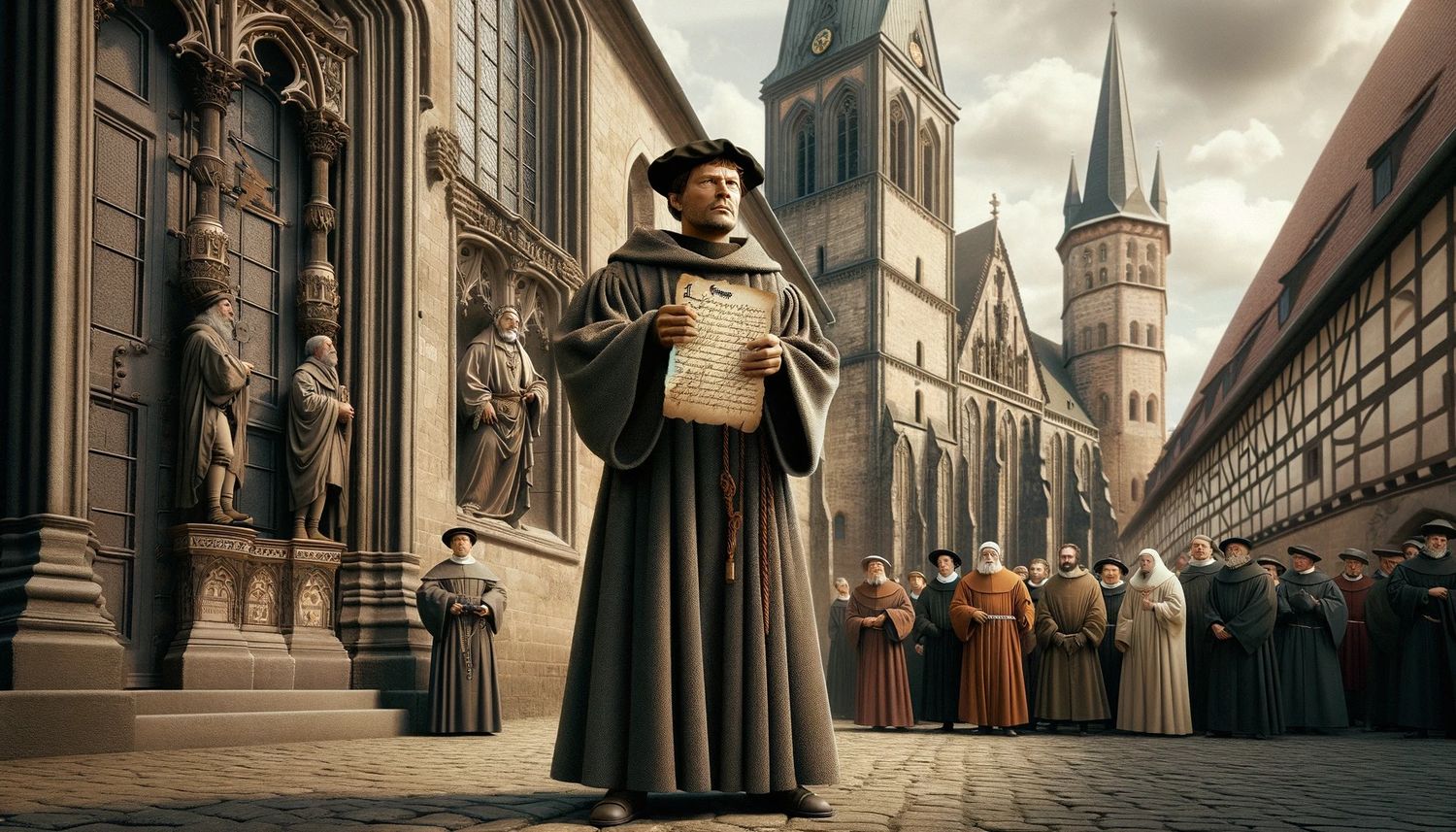
More than at any other time in American history, God's people need to be equipped with the glorious truths of God's Word, that they might enter the battle "and having done all to stand" victorious (Eph. 6:10-13). God's truth is marching on, and it will be victorious! But the question is, Will you be faithful in the battle? The charge of Martin Luther, still rings out today:

If I profess with the loudest voice and clearest exposition every portion of the truth of God except precisely that little point which the world and the devil are at that moment attacking, I am not confessing Christ, however boldly I may be professing Christ. Where the battle rages, there the loyalty of the soldier is proved; and to be steady on all the battlefield besides, is mere flight and disgrace if he flinches at that point.

Luther, Calvin, Knox, Edwards, Whitefield, and other heroes of the faith "conquered kingdoms" by preaching "the whole counsel of God" (Acts 20:27) in the power of the Spirit. They knew the doctrines of Scripture, and they applied them to the issues of their day. By God's grace, we can do the same today; but this will only happen if we diligently study God's Word (biblical doctrine) so we will be "handling accurately the word of truth" (2 Tim. 2:15).

This is why we need to study theology!

Robert Fugate is a Th.D. candidate at Whitefield Theological Seminary. His book, God's Revelation, is being used in over fifty countries, particularly in Africa and Asia for training pastors. Robert pastored for ten years in Omaha, and is currently a part-time staff member of Dominion Covenant Church, in Omaha, NE.

Endnotes

1. To be epistemologically self-conscious a person must deliberately choose doctrines, other beliefs, ethics, etc. that are consistent with each another and with the person's theory of knowledge (i.e., epistemology).

[© Robert E. Fugate, 2001]

back to top


National Reform Association,

Publishers of The Christian Statesman.
Declaring the Lordship of Christ since 1864
editor Bill Einwechter

A six month subscription to The Christian Statesman is FREE on request. Renewals are FREE on request.
POBox 8741-WP
Pittsburgh, Pennsylvania 15221


Use this form to comment on this site. Use this form to request a FREE introductory six month subscription to The Christian Statesman or to renew your existing subscription.


For a FREE introductory three issue subscription,
send email to Bill Gould with
your name and mailing address.

The National Reform Association depends on donations for all its operations, including publishing The Christian Statesman. If you will help support this web site and publication of The Christian Statesman, please make a contribution today. You can do so using


maintained by dan herrick [comments on web style]
[Validate this page Valid XHTML 1.0!] [Validate style sheet Valid CSS!]
Level Triple-A conformance icon,                      
          W3C-WAI Web Content Accessibility Guidelines 1.0
In Association with      
   Amazon.comFollow this link to buy your book from Amazon.com and make a small contribution to the National Reform Association