abstract: specifically, Israel was condemned because the people continued, or pretended to continue to call on Jehovah, while, in actuality, they were worshipping other gods. And what are they told? The calf of Samaria will be broken in pieces. They have sown the wind and will reap the whirlwind.

National Reform Association ==>Christian Statesman ==>March - April 2002 ==>Mount of Blasphemy

POBox 8741-WP
Pittsburgh, Pennsylvania 15221
The Christian Statesman

Mount of Blasphemy

by Richard McBane

On the morning of September 11, 2001, the Akron (Ohio) Beacon Journal published an extra edition. Emblazoned across the top of the front page, above a full-color photograph of the World Trade Center towers ablaze, were three words in the largest black type possible.

Oh My God!

This was not the introduction to a prayer. It was not a confession. It was not a supplication. Instead it was an empty ejaculation. Plainly, it was blasphemy; a taking of the Lord's name in vain, for vanity is, in fact, emptiness.

The Beacon Journal is not held up as a particularly egregious example of such blasphemy. It is merely a convenient example. Other examples can be found around us every day, in newspapers, on the radio, on the television, and in common conversation.

It was once said that the most commonly used three word phrase in the English language was "I love you." It is unknown how that was determined, but it seems that those three words have now been supplanted by the words "Oh my God." Whether a person has been informed that their child has fallen off a tricycle, or that they've just won some lottery, sweepstakes, or competition, their response is likely to be these words. If you doubt this, spend a day listening to talk radio, or to any TV channel, or, for that matter, to common conversation at the mall. By repetition alone, the sin of blasphemy becomes easier and easier, and, for the sinner, the name of God becomes emptier and emptier.

Before attempting to survey this veritable Mount of Blasphemy that is growing in our midst, consider the Third Commandment:

Thou shalt not take the name of the Lord thy God in vain; for the Lord will not hold him guiltless that taketh his name in vain (Ex. 20: 7).

The Westminster Larger Catechism and The Heidelberg Catechism both provide extensive definitions of what is required and what is forbidden in the Third Commandment. The whole, however, has been summarized in a few words by John Gerstner who wrote that to fulfill this commandment "...one must use the right words and the right thoughts in honoring God." And, he added, "The only way not to profane the name of God is to hallow it."1 By common dictionary definition, "hallow" is to make or think of as holy.

In the Old Testament, the root idea of the Hebrew word for blasphemy carries the sense of cutting in, piercing, or spurning--thus injuring the honor or good name of another. In the New Testament, the Greek word means speaking lightly, contemptuously, or injuriously of another. Thus, every one of the possible ways of dishonoring God is encompassed, and is included, in violations of the Third Commandment. And, all of them are neatly wrapped up in the word blasphemy.

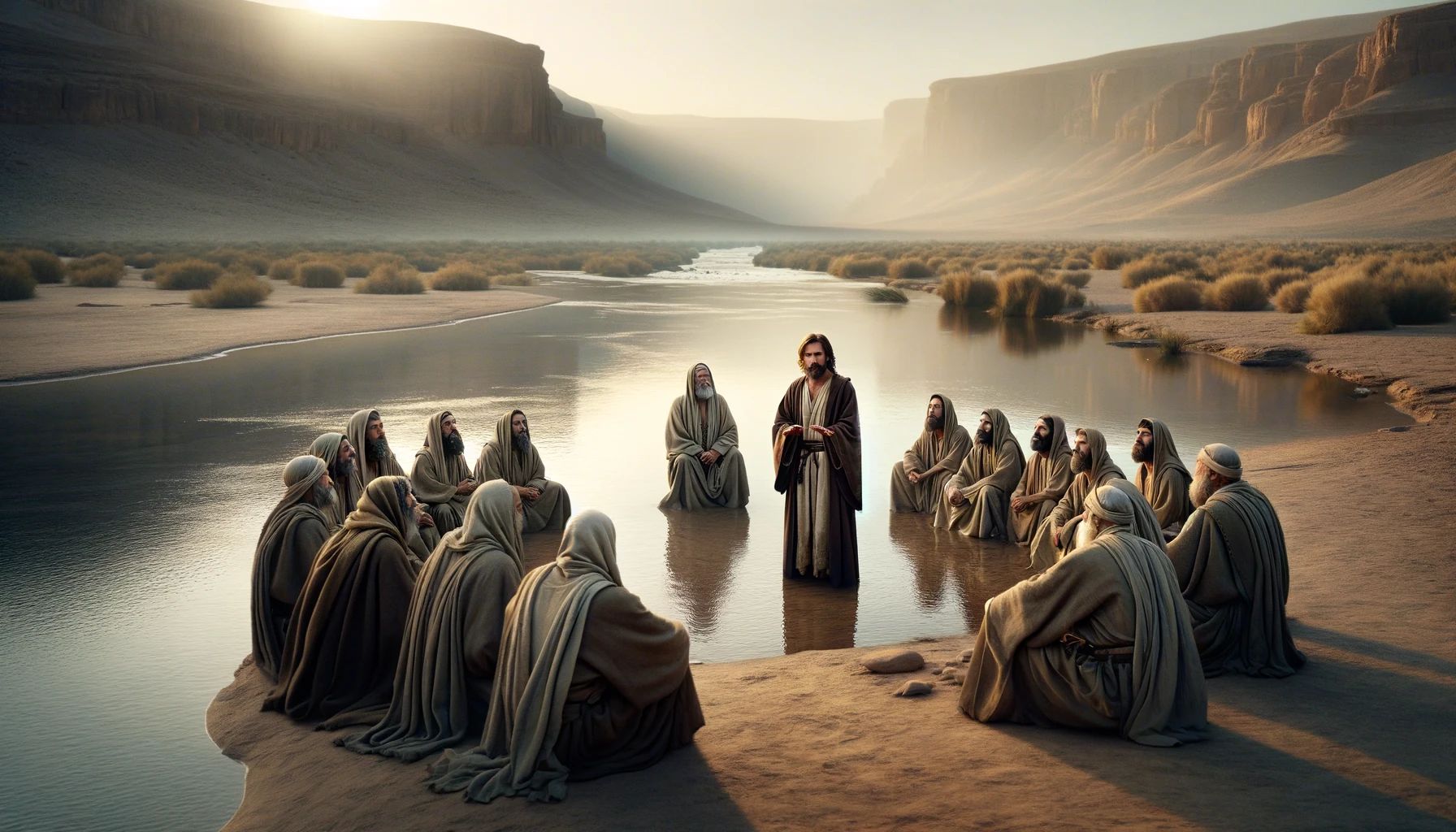
Scripture is replete with references to blasphemy. One example of it is found in the eighth chapter of Hosea. The book of Hosea is largely a polemic against syncretism; that is, against the combination or reconciliation of differing beliefs in religion. For our day, Hosea's condemnations should be a warning for the church to remain loyal, and to remain steadfast, in a culture that encourages compromise and acceptance of beliefs and principles that are incompatible with Scripture, incompatible with right doctrine, incompatible with God's truth; and, indeed, which blaspheme the very Spirit of God. Indeed, they should be a warning for civil leaders also to remain steadfast in rejecting such compromise and acceptance of unbiblical beliefs.

In the Israel of Hosea's day, the ancient faith of Israel was polluted with elements of the Canaanite fertility religion. These elements were incorporated into the supposed worship of Jehovah. Both civil and religious leaders were corrupted with this syncretistic religion, and Hosea warns in chapter 8, the first verse, that God will come as an Eagle against the house of the Lord because of their transgressions. Here it is spelled out in Scripture that judgment will begin with the household of God. The people who should have been most responsible for true worship were, in fact, most responsible for false worship. As John Calvin says, "... they had not fallen by mistake when they transgressed the covenant of the Lord, for they had been more than sufficiently taught by the law what faith and what purity the Lord required of them."2

The religious and civil leaders of Israel protest in chapter 8, verse two, "My God, we know thee." But Hosea says in the third verse, "Israel has cast off the thing that is good: the enemy shall pursue him." Now the "thing that is good," is, at a minimum, the true faith, and some commentators say that what is meant is that Israel has cast off God Himself. Therefore, the judgment of God pursues them and in verses four and five their worship of strange gods is dealt with. In this connection Calvin observes, "...when they corrupted and adulterated the priesthood, did they not, as it were, designedly extinguish the favour of God, and strive to annihilate whatever was needful for their salvation?"3

Hosea 8:6 says, "...the calf of Samaria shall be broken in pieces." This is judgment on their false religion, but God has even more wrath to pour out on them in verse seven. This is one of those passages that is frequently lifted out of context from the Authorized Version because it is such a well-turned phrase: "For they have sown the wind, and they shall reap the whirlwind."

Here, indeed, is cause and effect. "To sow the wind," says Calvin, "is nothing else than to put on some appearance to dazzle the eyes of the simple, and by craft and guise of words to cover their own impiety. When one casts his hand, he seems to throw seed on the earth, but yet he sows the wind. So also hypocrites have their displays, and set themselves in order, that they might appear like the pious worshippers of God."4

This is the appearance of worship without the reality, without the heart. There was no faith in their services, which meant that both their words and their actions were no more than empty show. Emptiness is vanity, and we come full circle to the words of the Third Commandment, namely, "... for the Lord will not hold him guiltless that taketh his name in vain."

Not only do the Israelites sin against God, violating the First Commandment, when they set up a syncretistic religion--"Thou shalt have no other gods before me" (Ex. 20:3) --but they also violate the Third Commandment because they blaspheme the Spirit of God in their false worship. Judgment is pronounced upon them.

Therefore, from Hosea, we should be both warned and encouraged to remain steadfast in the faith, for we are specifically instructed that falling into the trap of syncretistic religion, which is in itself blasphemy, is ultimately fatal both to the church and to the nation. And, indeed, in the example from Hosea, we see that the chosen people, the children of Abraham, to whom the truth had been revealed, were without excuse, and were held the most accountable for their apostasy -- "... for the Lord will not hold him guiltless that taketh His name in vain."

But there is another point still to consider from that portion of Matthew 12 where Christ is answering the accusation of the Pharisees that He cast out demons through the power of Satan. He says:

Wherefore I say unto you, All manner of sin and blasphemy shall be forgiven unto men: but the blasphemy against the Holy Ghost shall not be forgiven unto men. And whosoever speaketh a word against the Son of man, it shall be forgiven him: but whosoever speaketh against the Holy Ghost, it shall not be forgiven him, neither in this world, neither in the world to come (Matt. 12: 31-32).

This is the unforgivable sin--blasphemy against the Holy Spirit, the third person of the Trinity--unforgiven on earth, unforgiven in heaven.

What is this sin, and what makes it unforgivable? More direction is given in the parallel passage in the Gospel of Mark:

Verily I say unto you, All sins shall be forgiven unto the sons of men, and blasphemies wherewith soever they shall blaspheme: But he that shall blaspheme against the Holy Ghost hath never forgiveness, but is in danger of eternal damnation: Because they said, He hath an unclean spirit (Mark 3: 28-30).

The "because" sets forth a reason. "They said," that is the Pharisees said that He, that is Christ, had an unclean spirit--a demon. But, we know, and Christ demonstrated to the Pharisees that he was not empowered by a demon but by the very Spirit of God. So, Christ does not condemn them for what they said about Him, but for their actions in attributing to the very Spirit of God, to the third person of the Trinity, the character of Satan, and thus maligning the righteous character of God. This was the epitome of calling the light darkness and the darkness light. And, Calvin notes that Christ's pronouncement was not merely because they poured contempt upon the very Spirit of God with their words, but also because of their base and wicked thoughts.5

This blasphemy is not mere impenitence. It is not that they fail to recognize Christ as the only way of salvation. Nor is it a matter of ignorance, nor of thoughtlessness, nor of carelessness. Nor is the distinction of declaring blasphemy against the Spirit a way of elevating the Spirit above Christ, who is prophet, priest, and king, because the fullness of the Trinity shines through Christ. He cannot be separated from the Spirit.

So, how is it possible to identify this particular blasphemy, this particular sin. Remember, Christ was speaking to the Pharisees when He uttered this condemnation. The Pharisees were, or should have been, the most learned in the law. They were not ignorant, or thoughtless, or careless. The contempt they poured out was intentional. The power of God had been revealed to them, and they rejected it. Indeed, they reviled the Holy Spirit, in whom the grace and power of God are revealed to us, and who works in us.

Calvin says, "...no man curses the Spirit who is not enlightened by him, and conscious of ungodly rebellion against him."6

Remember Paul, after his conversion, referred to his former state as that of a blasphemer, but he says in 1 Timothy 1:13: "Who was before a blasphemer, and a persecutor, and injurious: but I obtained mercy, because I did it ignorantly in unbelief"

Here Paul draws a distinction between his sin, which was purposeful, and intentional, but done in ignorance, and his latter state when he was forgiven, because once Christ had revealed Himself to Paul, Paul no longer continued in rebellion against Him. Calvin concludes that "...those persons sin and blaspheme against the Holy Spirit, who maliciously turn to his dishonor the perfections of God, which have been revealed to him by the Spirit, in which His glory ought to be celebrated, and who, with Satan, their leader, are avowed enemies of the glory of God."7

Here is defined the height of blasphemy, but it remains to make an application to the United States in the 21st Century.

To begin with, we must recognize the height and difficulty of the mountain of blasphemy which has grown up in our midst. The daily growth of profanity and obscenity in the culture around us are but the foothills to the lofty crags and pinnacles of the mountain that towers over us. If every little hill of profanity were to be leveled, if every "Oh my God" were to disappear from thoughtless lips and tongues, the crags and pinnacles of blasphemy would be unmoved.

What are those crags and pinnacles?

In the so-called spiritual revival which, however briefly, followed the events of September 11, 2001, the crags and pinnacles have become more evident to a few discerning eyes. Let us borrow the binoculars of a few of these sharp-eyed mountaineers.

William F. Buckley, Jr., editor at large of National Review, on December 7, 2001, wrote of a speech given by Professor Gaddis Smith of Yale on the 300th anniversary of that institution. As reported by Buckley, Professor Smith said, in part, "Yale's 18th century God was an intolerant Puritan. In the 19th century, He became a smooth general Protestant. And today God means the spiritual center for all those, of whatever faith, who believe in the worth of the individual."8

Keep Mr. Buckley and Professor Smith in mind, along with the question: where are all those worthy individuals to find salvation?

The December 2001 edition of the Chalcedon Report included a brief reprint of part of the late R. J. Rushdoony's "Biblical Faith and American History." In it he wrote, "The real problem in the United States is Arminianism, which is a form of modified unbelief. Arminianism proposes belief in Jesus Christ, but acts on belief in man." He continues, "Our central problem is thus not open atheism, nor open humanism, serious problems though both clearly are. It is false theology, Arminianism." And Rushdoony wrote, "Where men adopt so organized a surrender of the crown rights of King Jesus over the world, of necessity it must have practical consequences. The surrender of the world coincides with the growth of false spirituality."9

In this vein, think about that great, fuzzy, feel-good, ecumenical service held at the National Cathedral in Washington, D.C., just days after the attack on New York City. There individuals who were, in a titular sense, supposed to be ministers of Christ, shared the pulpit or the podium with Hindus, and Buddhists, and Jews, and Muslims. It may be possible to find a justification for this in political expediency, or in political correctness, but certainly not in Scripture. It was an abomination.

Hosea, by the authority of God, condemned syncretism, the combining or reconciling of different religious beliefs. More specifically, Israel was condemned because the people continued, or pretended to continue to call on Jehovah, while, in actuality, they were worshipping other gods. And what are they told? "The calf of Samaria will be broken in pieces." They have sown the wind and will reap the whirlwind. Remember Calvin's words, "...when they corrupted and adulterated the priesthood, did they not, as it were, designedly extinguish the favour of God, and strive to annihilate whatever was needful for their salvation?"

Having the light, they chose darkness. And, as this was blasphemy for ancient Israel, is it not blasphemy in the United States in 2002? Surely, it is blasphemy raised to the highest pinnacle of that mountain of sin.

Whether any individuals were guilty of the unforgivable sin is not for us to determine. God alone is the judge of the hearts of men. But we must recognize the nature of the problem we confront. To return to the good professor Smith at Yale and his Arminian, humanist faith in the worth of the individual, we may agree with Mr. Buckley's observation that, "We certainly have a long way to go if we have to transcend the thought of Yale's scholars and clergy during those 300 years leading up to September 11."10

But, the size of the task before us should not be a matter of discouragement. Instead, we should be comforted and encouraged by the certain knowledge that the Lord will strengthen us, and that the ultimate victory is His.

But, what should we do? We are instructed in Jude, verse 3:

Beloved, when I gave all diligence to write unto you of the common salvation, it was needful for me to write unto you, and exhort you that ye should earnestly contend for the faith that was once delivered to the saints.

Contend for the faith, and do so with confidence, for we should have the same confidence expressed by Paul, that one-time blasphemer, in Romans 8:38-39:

For I am persuaded, that neither death, nor life, nor angels, nor principalities, nor powers, nor things present, nor things to come, Nor height, nor depth, nor any other creature, shall be able to separate us from the love of God, which is in Christ Jesus our Lord.

Those who climb to the height of blasphemy must fall, but the faithful are always secure in Christ. Somehow, in contending for the faith, that message must reach not only the faithful in the pews, but it also must reach our civil magistrates at every level.

Fuzzy and feel-good words may win a few votes for today, but it does not excuse blasphemy, and it will not turn away the wrath of a righteous God.

Richard McBane is a ruling elder at Faith Presbyterian Church (PCA) in Akron, Ohio, and a former moderator of the Presbytery of the Ascension. He retired from the Akron Beacon Journal in 1997 after more than 30 years as a reporter. He is a graduate of Hiram (Ohio) College and holds a master's degree in history from Michigan State University. He can be contacted at RLMCBANE@aol.com.

Endnotes

1. John H. Gerstner, Reasons for Duty, (Morgan, PA: Soli Deo Gloria Publications, 1995), pp. 67-68.

2. John Calvin, Commentaries on the Twelve Minor Prophets, translated by the Rev. John Owen, in Calvin's Commentaries (Grand Rapids: Baker House Books, 1999), Vol. XIII, p. 280.

3. Ibid., p. 282.

4. Ibid., p. 293.

5. John Calvin, Commentaries on a Harmony of the Evangelists, Matthew, Mark, and Luke, Vol. II, translated by the Rev. William Pringle, in Calvin's Commentaries, (Grand Rapids: Baker House Books, 1999), Vol. XVI, p. 74.

6. Ibid., p. 75.

7. Ibid., p. 76.

8. William H. Buckley Jr., "Searching for God & Man," National Review Online , Dec. 7, 2001.

9. R. J. Rushdoony, "Biblical Faith and American History, Part 2: The Present," Chalcedon Report, Dec. 2001, pp. 2-3.

10. Buckley, op.cit.

back to top


National Reform Association,

Publishers of The Christian Statesman.
Declaring the Lordship of Christ since 1864
editor Bill Einwechter

A six month subscription to The Christian Statesman is FREE on request. Renewals are FREE on request.
POBox 8741-WP
Pittsburgh, Pennsylvania 15221


Use this form to comment on this site. Use this form to request a FREE introductory six month subscription to The Christian Statesman or to renew your existing subscription.


For a FREE introductory three issue subscription,
send email to Bill Gould with
your name and mailing address.

The National Reform Association depends on donations for all its operations, including publishing The Christian Statesman. If you will help support this web site and publication of The Christian Statesman, please make a contribution today. You can do so using


maintained by dan herrick [comments on web style]
[Validate this page Valid XHTML 1.0!] [Validate style sheet Valid CSS!]
Level Triple-A conformance icon,                      
          W3C-WAI Web Content Accessibility Guidelines 1.0
In Association with      
   Amazon.comFollow this link to buy your book from Amazon.com and make a small contribution to the National Reform Association